4 Types of Digital Noise Distracting Your Brand

(And How To Fix Them)
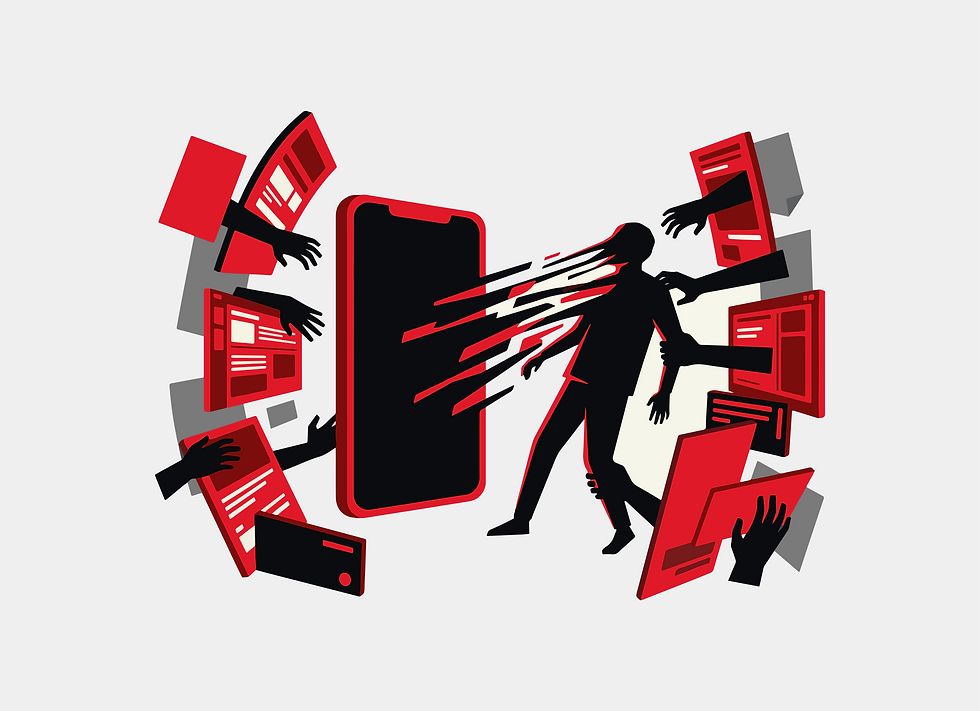
Eleven years into running my design practice—from establishing mjdsgn in Edinburgh in 2015 to now working out of the Highlands—I still occasionally find myself navigating dead ends. I call this digital noise. It could be a shiny new tool that fractures your workflow, a vanity metric you chase on social media, or the creeping pressure to adopt AI without a strategy. Everyone is suffering from digital noise overload. I have identified four key areas where this noise can distract your brand, and how to avoid them.
01 | AI Exploration
AI is a polarising topic, but the problem is rarely the tool itself. While browsing the Highlands and Islands Enterprise website, I found a resource showing who has won funding for various projects. One common category among service industries is the AI exploration grant. A consultant comes in and suggests where AI is best suited to help speed up admin tasks and untie specific bottlenecks in your business.
This could create an adoption cliff, whereby companies buy into expensive AI tools without a long-term strategy. Let us say a grant provides £2,000 to identify gaps. For a business of 50 people, a Claude Team subscription still costs around $1,000 a month, and employees still need training to use it effectively and safely.
The hidden friction here is that it remains difficult to estimate any tangible return on investment after AI is implemented. When you factor in rolling subscription costs and the heavy investment required for training, the financial pressure builds. Too often, downsizing staff becomes the inevitable next step to even up the costs of an AI rollout that was supposed to make things easier.
Imagine an energy transition consultancy took on an AI grant. Your brand would need to be very serious about avoiding generative AI for technical compliance or safety audits, where hallucinated data poses a massive risk. At the bottom of every chatbox, it clearly states that AI can make mistakes.
The strategic alternative is to shift from additive tech to a subtractive strategy. Spend money identifying the real bottlenecks in your business first before going straight for AI. AI is a tool, not the strategy. Using consultants or internal reviews to solve structural problems is key before plugging your brand into AI models.
02 | The Content Treadmill
There was a time when everyone was addicted to likes. However, the amount of people who mindlessly tap a button does not give your brand any real value. Likes, impressions, and reach are metrics that drive the network algorithm, not a reflection of who is actually buying your product or service. This is when businesses stretch themselves thin, creating superficial content daily just to remain on the content treadmill. It is unsustainable and often does more damage than good.
Take a craft food and spirits producer as an example. If they churned out face-value content twice a day, that volume would seriously undermine the considered craft they have spent years perfecting. Instead, a business like that is more suited to purposeful storytelling. Quality pieces of content delivered with intent, not content for the sake of being visible.
To cut through the digital noise, a shift in strategy is required. Focus on metrics that correlate directly to revenue and real business outcomes. Choose one or two channels where your audience actually exists and makes purchase decisions. There, you can deliver high-value, verifiable expertise.
03 | The SaaS Sprawl
The SaaS sprawl is one scenario I have spent plenty of time replaying. Operating a solo founder-led business requires digital literacy and a solid understanding of how digital tools work. I have spent countless hours signing up for software trials, juggling subscriptions, and even recreating project management databases in other apps. I could be focusing on doing what my business does, rather than how it does it.
I still encounter this friction, though now I manage it rather than fall for it. I run a tool audit every couple of months. I keep my core client database in Notion and design assets in Figma and Affinity Designer, actively eliminating single-use subscriptions elsewhere. I measure tech by its net time saved after accounting for maintenance. If it does not save me time or add to my workflow, it is a cause of digital noise. This way, I develop how my work is done, but in a more focused and controlled way.
04 | Trend Chasing & Shiny Object Syndrome
When I think of reactionary trend chasing, my mind immediately goes to viral social media trends—NFTs, memes, and more recently, AI avatars. If your business followed every campaign, would your brand be successful, or would your message get muddied? Shiny object syndrome here is buying into every new tool and switching platforms just out of a fear of missing out. It creates brand fragmentation and adoption anxiety. Just doing these things creates the illusion of success by being busy.
The internet is full of opportunity, but jumping blindly onto a platform just because it worked for someone else isn't a strategy. It is desperation. That decision needs to be anchored by a stable, minimal framework defined strictly by a core value proposition and your audience's needs. Anything else just turns into digital noise, doing more harm than good and pushing ideal customers away.
I have lived all four of these distractions and learned that true sustainability comes from subtracting distractions, consolidating workflows, and solving genuine operational problems.
Digital noise goes far beyond the points I have discussed today. I would be interested to hear if you have encountered these or anything different in your business.
What kind of digital noise is currently distracting your brand?
Mike

